Mind Your Time for Your Best Days

When you hear the phrase “time management,” what springs to mind?
If you are a less structured person, the concept of time management might make you cringe! Your best days are free-form days – days where spontaneity abounds and you have the freedom to follow wherever you creativity takes you.
On the other hand, if you are a more structured person, the notion of time management is rather appealing to you! After all, tools and strategies the enable you to be more productive are rather exciting to you!
Which way do you lean?
The Two Sides of Time Management
Some cringe, while others get excited about the tools, techniques, and strategies that help you use your time efficiently and get more done. They help you maximize your time and increase your productivity. I call that the “Practical Side” of time management.
There’s another side of time management that rarely gets attention, but is perhaps even more critical. I call that the “Perspective Side” of time management.
I’ve shared this Thought Cycle before, but I want to highlight it once again as it relates to time because what you think, or what your perspective is on time, impacts your feelings which plays a significant role in the actions you take. In the end, your experience then reinforces your perspective.
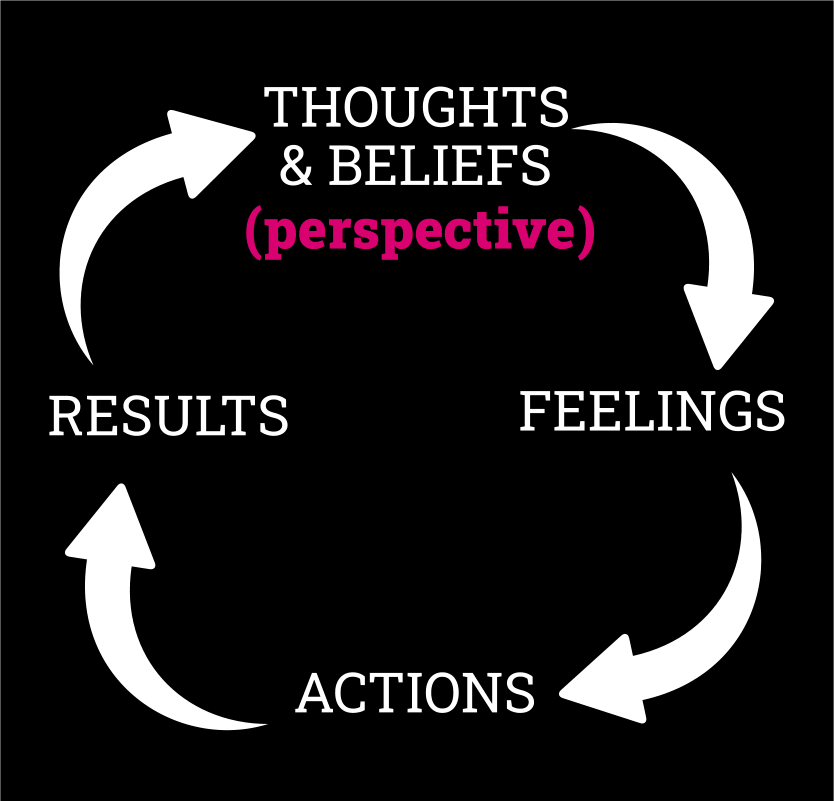
If you’ve struggled with managing your time or are dissatisfied with your life, it’s worth examining your perspective on time. Contrary to what the term managing time implies, time is fixed and not something to be managed. Instead, it’s about you managing you!
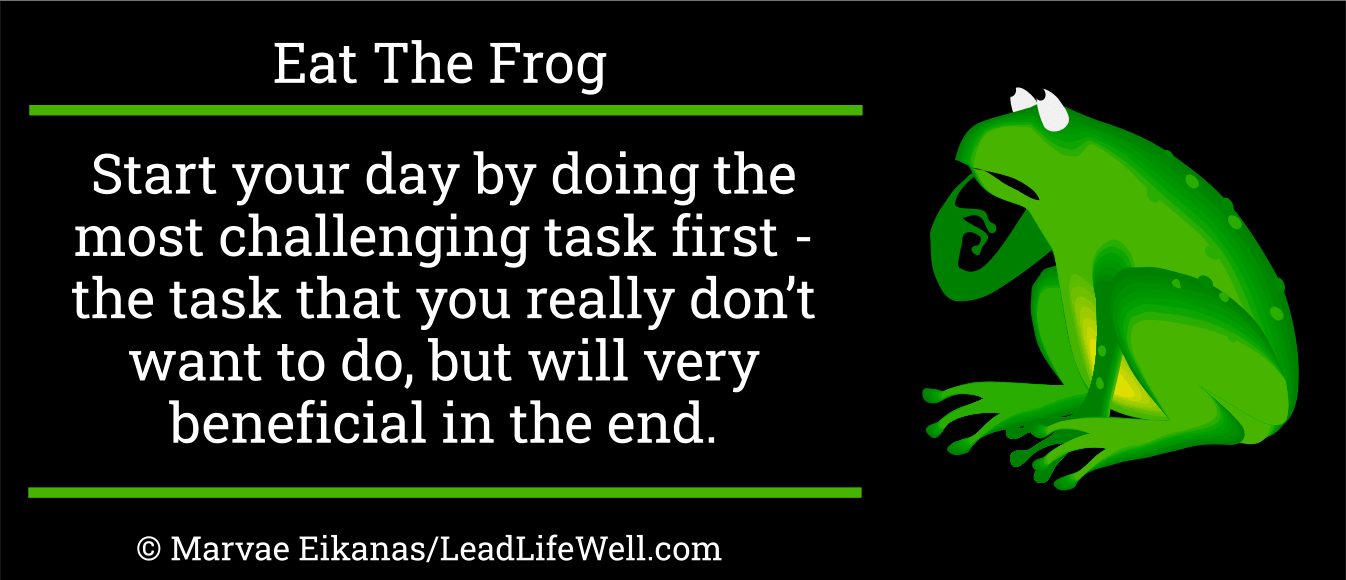
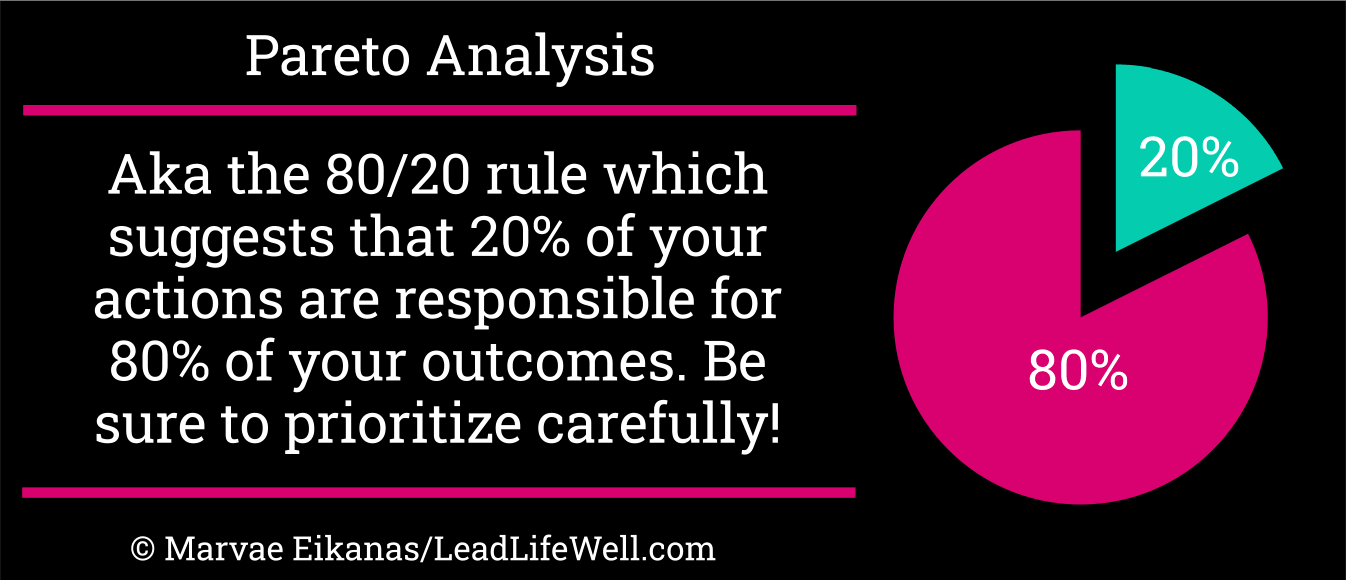
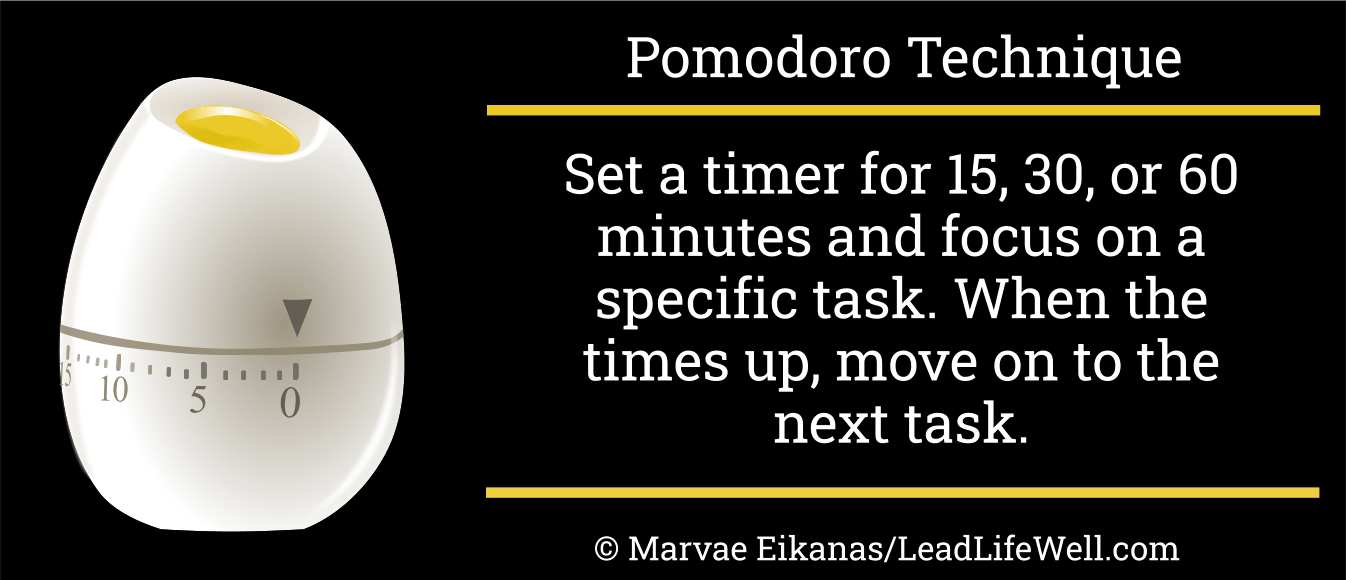
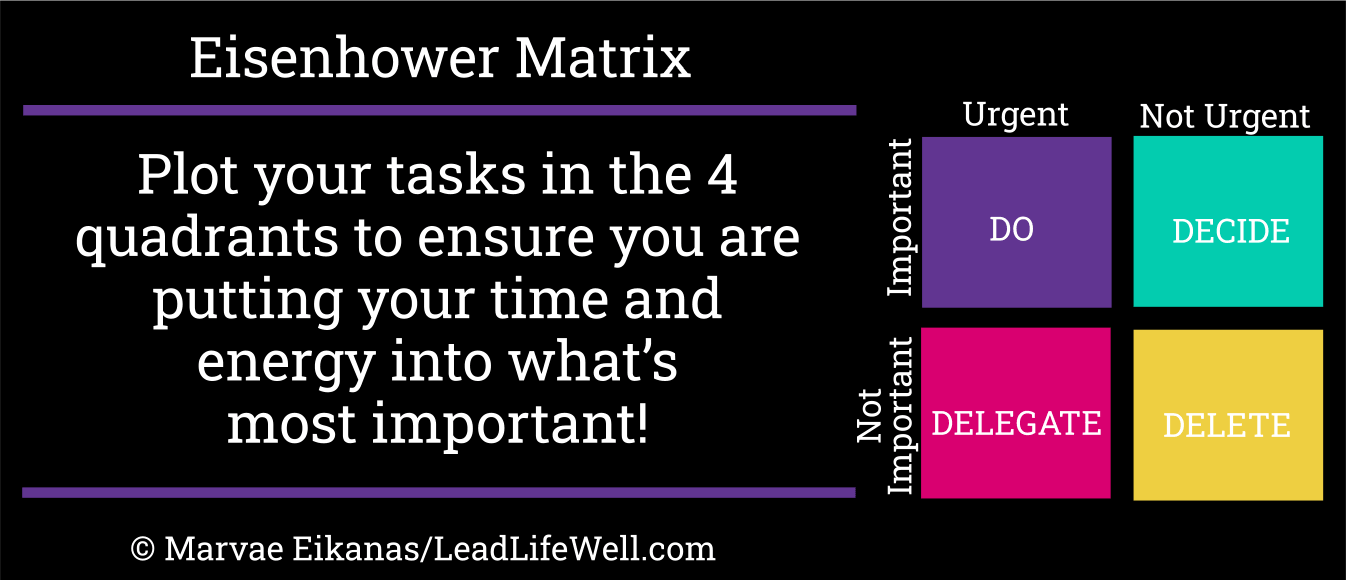
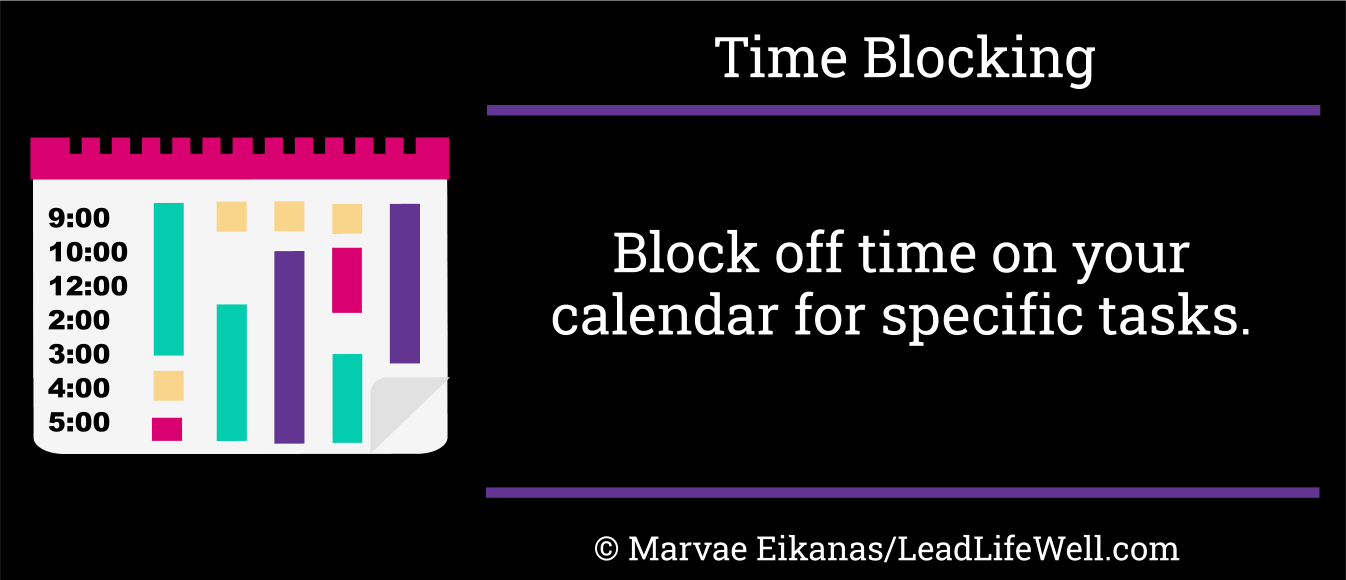
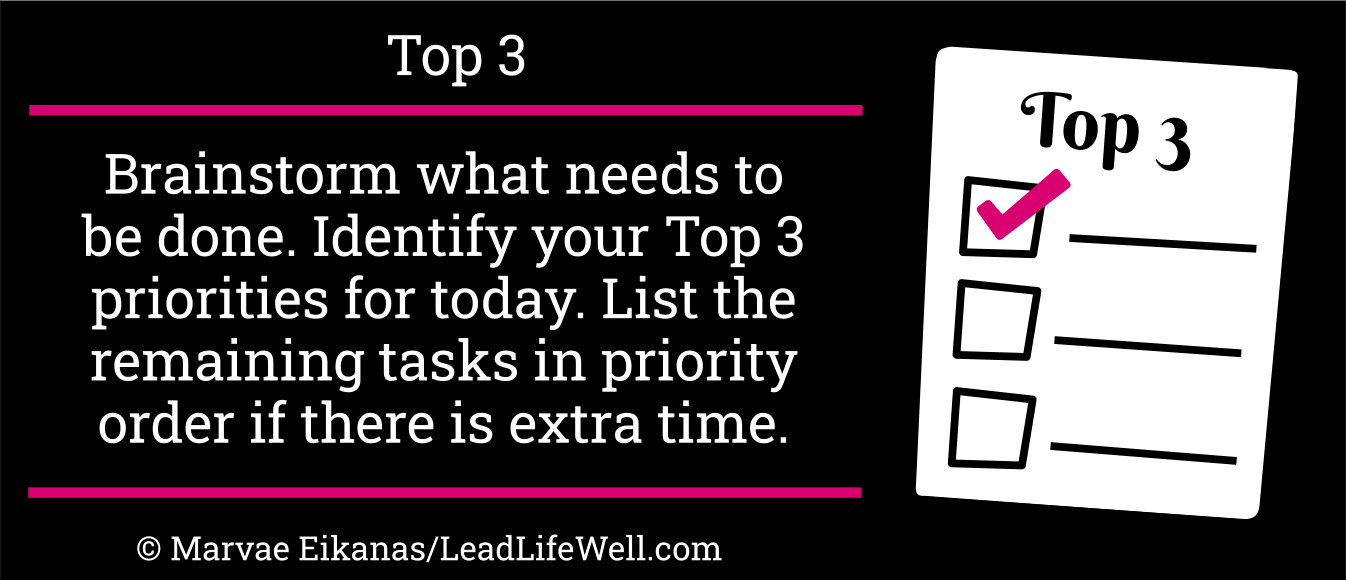
There are a host of amazing tools and strategies for maximizing your time – they are helpful! I’ve included 7 at the end of this post. What works for me may or may not work for you. It’s a matter or knowing yourself and a little trial an error.
The bigger question: if you were able to eliminate your misconceptions about time, how might that enhance not only your productivity, but also your overall satisfaction and enjoyment of life?
Let’s explore a few of the perspectives around time that might be tripping you up:
1. The Scarcity Perspective: There’s Never Enough Time!
Symptoms: Feeling rushed, perpetually behind, and/or overwhelmed. Moving from task to task without breaks, overestimating what you can accomplish, and viewing downtime as time wasted. Not making time for exercise, relationships, hobbies, self-care, or personal growth to get more done.
Solution: Recognize how fear is fueling you. Rather than focusing on trying to do more, faster, focus on slowing down, quality, and being present. Consider who you want to be and what you value most. Embrace your limits. Accept what is. Practice gratitude and appreciate every moment. Remind yourself, “I have all the time I need!”
2. The Victim Perspective: External Forces Are Working Against Me
Symptoms: Blaming others, defensiveness, feeling helpless, or even hopeless.
Solution: Focus on what you can control – your choices, reactions, and attitude. Challenge your self-talk and reframe your thinking. Take intentional small actions to help you regain your sense of agency.
3. The Productivity Perspective: The More You Accomplish, The More Valuable or Worthy You Are
Symptoms: Endless doing, a frantic pace, lack of margin, multitasking, exhaustion, skipping breaks, back-to-back activities, little or no downtime. Because of all the doing, there may be friction in your relationships, health challenges, and excessive stress.
Solution: Connect to your identity in Christ and meditate on how valuable you are to Him. Determine what’s most important to you and how to concentrate your efforts in those areas – no more than three! Practice single-tasking, taking breaks, making time for yourself, and for the people in your life. Busy isn’t better – in fact, I’ve banned the word busy. There’s a whole lot more to life than doing. It’s a healthy combination of being and doing that leads to a purposeful and peaceful life!
4. The Control Perspective: With Planning and Discipline I Get It All Done!
Symptoms: You may have some success, as your ability to organize and determined discipline can work in your favor. However, you may also have a never ending to do list and experience some serious frustration when unexpected disruptions mess with your plans. As your list of tasks grows, you forego the life-giving activities that fuel you. Eventually it all adds up to diminishing returns and burnout. Failure looms large!
Solution: Shift from trying to control everything to intentionally choosing what is worthy of your attention, including those life-giving activities, people, and your own self-care. You can’t do it all! Prioritize, set start/stop times, and determine what is enough. Be gentle on yourself and put less pressure on yourself.
5. The Perfection Perspective: With More Time I Will Get It Right
Symptoms: Overthinking, investing too much time on details that aren’t important, putting off finishing because things don’t feel good enough.
Solution: Do your best in the time allotted. While excellence matters, sometimes done is better than perfect…and there is no perfectly done.
6. The Procrastination Perspective: I’ll Do It When I’m Feel Ready
Symptoms: Avoiding uncomfortable tasks, wanting to get in the “right frame of mind” before starting, and hoping that motivation will eventually kick in. Being in the habit of underestimating how much time tasks take to complete and missing deadlines.
Solution: Take action – even a small step ignites momentum!
7. The Urgency Perspective: Everything Is Important and Needs My Attention Now!
Symptoms: Running around and putting out fires. Confusing urgency with importance. Being perpetually in motion, but not getting what’s most important done. Letting the day dictate what you will put your time and energy into.
Solution: Taking time to reflect and assess where you are now and what is most important. Often, what is most important whispers while the unimportant shouts! Get better at knowing the difference.
8. The People Pleasing Perspective: Your Priorities Trump Mine
Symptoms: Being available, responsive, and helpful at all times. Struggling with saying “no,“ over-committing, or putting yourself last. Lacking boundaries. Ignoring your limits. Resentment and/or burnout.
Solution: Be helpful, but not at your own expense. Pay attention to your own priorities and limits. Resist trying to be all things to all people. Noting the ways that pleasing backfires and ends up disappointing.
9. The All-or-Nothing Perspective: If I Can’t Do It All, Why Start?
Symptoms: Not tackling a task if you don’t have a solid block of time. Struggling to keep a routine – life is always changing. A cycle of stopping and starting.
Solution: Recognize how valuable small amounts of time are. Remember, getting something done is better than getting nothing done!
10. The FOMO Perspective: If I Don’t Say Yes, The Opportunity Will Be Lost
Symptoms: Taking on too many projects, a life brimming with activities, and struggling to commit because something better might come along.
Solution: Coming to grips with the fact that every “yes” has a cost. You can’t do everything, but really appreciate and enjoy what you are able to do.
11. The Achievement Perspective: The Best Use of My Time Is Getting Results
Symptoms: Judging your day by what you accomplish. When you don’t get much done, you feel inadequate or like a failure. You refrain from activities that don’t lead to visible results.
Solution: Come to terms with the fact that your worth is not dependent on your achievements. While your accomplishments matter, your worth is found in Him. You are a human being, not a human doing. Some of the most valuable uses of time can’t be measured.
12. The Comparison Perspective: I Should Be Able to Keep Up With What they Get Done
Symptoms: Using other people as the measuring stick for how you manage time leaves you feeling less than, or better than, and neither are necessarily accurate. Ignoring all the factors at play including differing responsibilities, resources, abilities, goals, and life season causing you to judge yourself too harshly or minimize your advantages.
Solution: Recognize that everyone is in a different place in life and focus on your priorities, responsibilities, and capacity in this season.
13. The Guilt Perspective: Resting or Being Is A Luxury
Symptoms: Restlessness. Rarely being present and instead focused on what needs to be done. Feeling you don’t deserve or haven’t earned rest, time dedicated to what you need, or what would energize you. You are conditioned to believe your worth is in what you do. Thinking in terms of “I should…” Multitasking and/or half-resting.
Solution: Explore where your guilt conditioning comes from and replace that notion with truth. Practice a rhythm of completing two tasks and then resting – just being. Take a Sabbath. Determine what “enough” looks like for you. Push through the discomfort you feel when not doing.
14. The Future-Focused Perspective: Someday Life Will Slow Down and Be Better
Symptoms: Postponing key aspects of life including relationships, life-giving activities, and meaningful experiences and doubling down to keep up with everything. Important events pass you by.
Solution: How you live life now is how you will do life later. Recognize that there’s no time like the present. The future isn’t guaranteed. Do what needs to be done AND enjoy today.
15. The Fixed Perspective: What Is Won’t Change
Symptoms: You are stuck. Your schedule, responsibilities, habits, etc. are incapable of changing; there are no alternatives.
Solution: Yes, you have the same 24 hours as everyone else, but you can allocate how you use your time differently. Be open! Brainstorm the possibilities and explore the alternatives. Invite someone else to help you reimagine your routines, responsibilities, and habits!
Which of these perspectives do you relate to?
How would you like your days to flow? Your best days…
- Reflect what’s most important to you – your values and priorities.
- Happen when you are walking in who God created you to be.
- Come about when the bulk of your day is spent in the zone doing what you do best.
- Include work, rest, and something that lights you up!
- Have space to breathe in them – margin, rest, and time to think.
- Begin with you being compassionate to yourself.
- Are the days you are truly trusting God!